
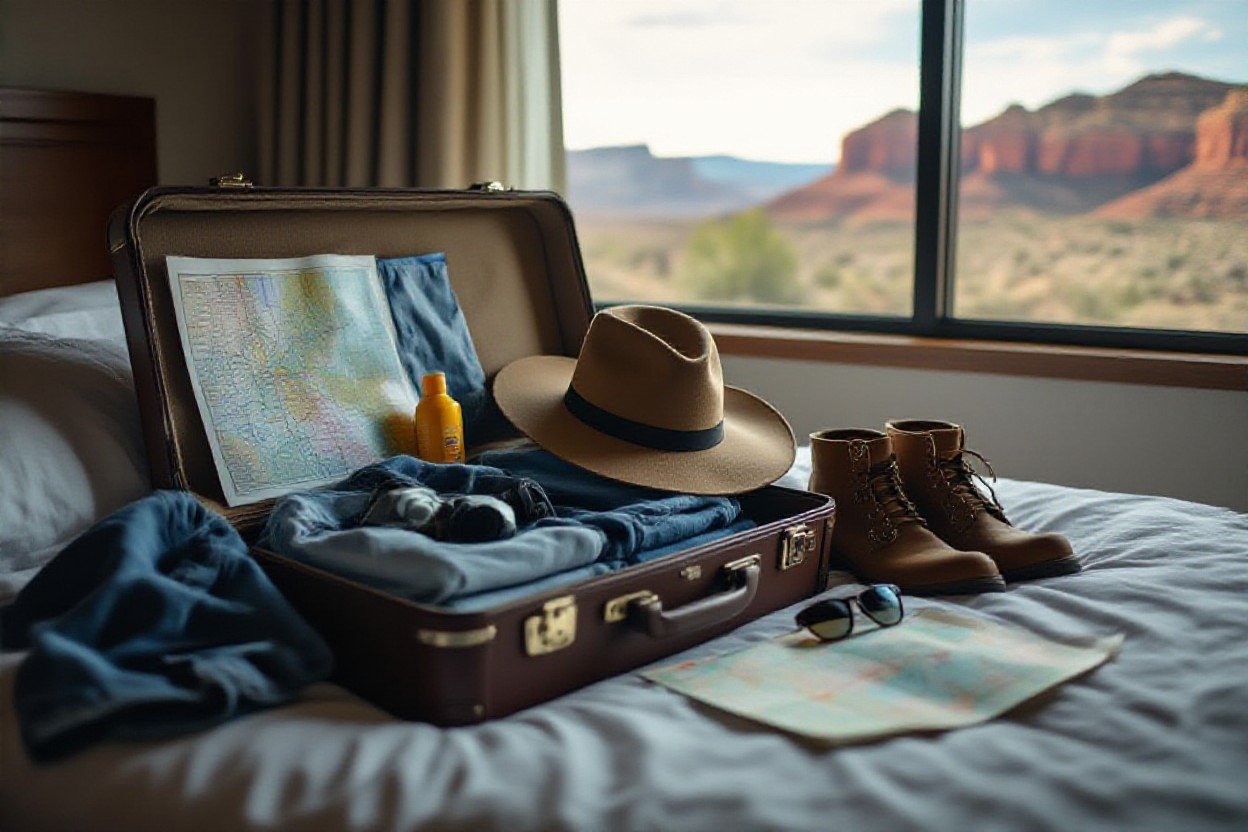
You should’ve seen her spread across the kitchen table with maps, sunscreen and a pile of snacks, laughing while he tried to stuff boots into an overstuffed bag; she planned routes, packed layers for weird desert nights and made a checklist they could actually use. She booked hikes, snagged reservations, and double-checked car gear – because she likes a little control, right? It’s a mix of practicality and curiosity, and their trip felt ready before the plane even took off.
Choosing the Right Clothes: What’s in Our Suitcase?
She laughed when he tried to cram ten shirts into a carry-on, so they pared down to 3 T-shirts, 2 long-sleeves, a lightweight jacket, one pair of jeans, one pair of shorts, a casual dress and a packable rain shell. They used packing cubes and left the heavy sweater at home since most days hit 80-95°F and evenings dip cooler. It made mornings faster, and she kept a small laundry sink kit for quick washes.
Weather Considerations: What to Pack
On day two the forecast flipped to 48°F at night, so they leaned into layers: a moisture-wicking base, a thin merino mid-layer and a light shell, plus 30+ SPF sunscreen and a wide-brim hat for hikes. Because desert days can climb to 85-95°F they packed breathable cotton and quick-dry shorts, and one sun shirt for longer trails. He tucked a compact umbrella and zip-top bags for electronics after a surprise downpour.
Comfy vs. Stylish: Finding the Perfect Balance
She tried on a sundress with hiking boots and it worked-style and comfort can coexist if you pick versatile pieces: two neutral bottoms, three tops that mix, one dressy outfit for dinner and two pairs of shoes – sneakers and sandals. They favored wrinkle-resistant fabrics and a lightweight scarf that dresses things up. Who says you can’t look put-together after a 6-hour road trip?
At a roadside cafe she swapped heels for slip-on sneakers to save time, and that’s the trick: plan outfit formulas like 3 bottoms, 4 tops, 2 layers, 2 shoes and one go-to accessory; it covers sightseeing, a casual dinner and a dusty trail without lugging extra bags. She packed neutrals so everything mixed easily, used packing folders to keep a dress crease-free, and brought a small stain remover. They washed socks and tees in sinks, hung them overnight, and stretched the wardrobe without stress.
Why Taking Selfies at Landmarks is a Must!
Capturing Memories: The Importance of Photos
When she stumbled onto the South Rim after a long dusty hike, she laughed and said “one selfie and we’re done” – then took twenty, because memories pile up fast. Photos lock in the light, the squinting faces, the goofy windblown hair. He flips through shots later and they both relive that three-hour detour like it was five minutes. Who wouldn’t want a handful of real moments to scroll through when winters get long?
Fun Spots to Snap: Our Go-To Landmarks
A quick story: at Monument Valley they made a game of who could get the best perspective, and that playful competition made their photos way better. Sedona’s Cathedral Rock, Antelope Canyon, Horseshoe Bend – those were top picks, each with a different vibe. They hit four landmarks in two days, used a simple tripod and a timer, and ended up with shots that actually felt like the trip.
On a practical note she learned golden hour – about an hour after sunrise or before sunset – makes colors pop; Antelope Canyon requires a guided tour, usually 45-90 minutes so book ahead; Horseshoe Bend is roughly a 1.5 mile roundtrip walk from the parking area, bring water. He swears by a cheap tripod and the phone timer, she likes a selfie stick for wide shots, and they always scout a composition fast.
Google to the Rescue: Finding Cool Places to Explore
They trusted Google to turn vague ideas into a packed itinerary. She typed “slot canyons near Page, AZ” and flagged Antelope Canyon tours and Horseshoe Bend, which sits about 5 miles from Page so they saved an afternoon; he searched “Sedona vortex hikes” and found two 4-mile loops with great sunset views. And Google Photos gave recent visitor shots, so they avoided washed-out trails. Because service can drop, they saved offline maps and pinned exact coordinates, simple but it saved time and stress.
Tips for Scouting Hidden Gems
She used sleuthing tricks to find spots locals love. Try mixing search terms, check community threads, and peek at recent photos to spot seasonal blooms or dry washes.
- Join local FB hiking groups – people post real-time tips
- Scan Instagram location tags for fresh pics
- Use satellite view to find pullouts, washes, and tiny trailheads
Using Reviews & Maps Effectively
He relied on reviews and satellite view to avoid surprises. Filter reviews by the last 6 months to catch closures or new fees, watch for repeated mentions (parking, crowds, dogs), and use satellite to eyeball parking and approach roads; 4.0+ stars with 100+ reviews is usually a safe bet. And screenshots of driving turns saved them when signal dropped.
They dug deeper by cross-checking multiple map sources and photos. Use Google Maps for routes, AllTrails for trail distance and elevation (example: 3.5 miles, 400 ft gain), Yelp for nearby services, and Street View to confirm parking spots. Download GPX or pin coordinates in offline mode, check recent 1-star complaints for gated access, and note permit rules or fees-small checks that prevent whole-day headaches.
Editing Our Pics: Making the Ordinary, Extraordinary
Apps We Love to Use
Surprisingly, she found that a few phone apps turned mediocre shots into gallery-ready images faster than desktop suites. Lightroom Mobile was the go-to for quick RAW tweaks – exposure +0.3, clarity and temperature tweaks; Snapseed handled selective fixes and healing; VSCO gave film-like presets in one tap; TouchRetouch erased power lines in seconds. They often spent just 5-10 minutes per favorite photo and still got magazine-worthy results, which saved time on a tight trip schedule.
- Lightroom Mobile – RAW editing, curves and selective brushes.
- Snapseed – precise healing, selective blur and structure control.
- VSCO – film-style presets and grain for mood.
- Any top edit starts with a clean crop and exposure baseline.
Simple Tips to Enhance Your Photos
Oddly enough, a crop and a small exposure shift fixed more of their shots than crazy filters. She used the rule of thirds grid, kept ISO under 800 for cleaner skies, and dialed shutter speed to at least 1/125 for walking subjects; for sunsets she aimed to shoot 20-30 minutes before and after golden hour. They also bracketed tricky scenes – three exposures at -1, 0, +1 stops – and merged when dynamic range was wild.
More detail helped when scenes were messy: she often nudged contrast +8 and decreased saturation -4 to avoid oversaturated skies, then added selective warmth for skin tones. Because the Arizona light can be harsh midday, she leaned on graduated filters in-app to tame highlights, and used local brushes to lift shadows by about +15. For landscapes they cropped to 3:2 or 4:5 for prints and kept horizon lines straight – tiny fixes that make a big difference.
- Always start with a straight horizon and a considered crop.
- Use local brushes for shadows and highlights rather than global sliders.
- Shoot in RAW when possible to retain 12-14 stops of data for recovery.
- Any strong edit began with subtle changes, not radical ones.
Food Choices: Cooking Up Deliciousness Together
How did she turn their tiny rental kitchen into a place that felt like a destination meal each night? She packed a 2-burner camp stove, cast-iron skillet and a tiny spice kit, planning mostly 30-minute, one-pot dinners so he could jump in without chaos. They hit farmers markets in Sedona for tomatoes and corn, used foil packets for fish or veggies to save cleanup, and kept breakfasts hearty so afternoons on trails didn’t tank.
Our Favorite Recipes to Prepare on the Road
Want easy, crowd-pleasing meals with minimal fuss? They swear by breakfast burritos (6 eggs, black beans, salsa) that take 15 minutes, sheet-pan fajitas with 1 lb chicken and 3 peppers, quinoa salad with cucumber, cherry tomatoes and feta that lasts 3 days, and foil-pack salmon with lemon for a 12-15 minute grill finish. He grills, she assembles, and everyone eats well without a sink full of dishes.
Eating Healthy While Traveling: Is It Possible?
Can healthy choices survive long drives and diner temptations? Yes, they lean on protein-forward breakfasts, single-serve nuts and Greek yogurt, and limit full-restaurant meals to one a day while buying local produce to fill gaps. She swaps fries for grilled veg, he orders salads with added protein, and those small swaps keep energy high for hikes and sightseeing.
How do they actually make it stick day after day? They aim for 25-30 g protein per meal, carry 2 liters of water each and target 3-5 servings of veg daily, prepping mason-jar salads and pre-cooked chicken to toss into wraps; he trades soda for sparkling water, she keeps single-portion hummus and cut veggies handy, and they plan one splurge every 2-3 days so cravings don’t take over.
Water and Campsite Anxiety: How I Handled It
Arizona summer days often top 100°F (38°C), so she treated water and campsite worries like logistics, not drama. He mapped water stops, packed a 3-liter bladder plus two 1-liter bottles, and they planned hikes for early morning and late afternoon when temps dip. They split responsibilities – she monitored fluids, he handled shade and tent setup – and that team approach killed a lot of the fuss before it started.
Staying Hydrated in the Desert Heat
In hot conditions the body can need 1 to 1.5 liters per hour, so she aimed for steady sipping, not gulps. She used a 3-liter reservoir for car use and a 1.5-liter bottle on the trail, plus electrolyte tablets every few hours – tastes better and keeps cramping away. And they staggered activity: short hikes before 9AM, shaded breaks, salty snacks, plenty of sunscreen – simple rhythms that actually made a difference.
Overcoming the Nerves of Camping
Coyotes and javelinas are most active at dusk and dawn in Arizona, so he planned tent placement and food storage around that fact. She did a quick perimeter check, kept food in the car, used a headlamp with red mode, and they agreed on a “check-in” routine before lights-out. It helped that they practiced tent setup at home once – small rehearsals cut the what-ifs down big time.
Trying one short practice night nearby really eased their jitters. She packed the exact sleeping setup, he brought the same lantern, they timed how long it took to set up and tear down. What worked best? A tiny comfort item – a small pillow – and a simple checklist stuck on the cooler. Those little predictable things made the woods feel less wild and more manageable.
The Real Deal: Everything Turned Out Nicely, but Not as Planned
On the second morning their 6:10 am flight was delayed four hours and the GPS rerouted them over a 30-mile unpaved stretch, but she laughed it off, he found a roadside diner with the best green chile omelet and they ended up camping under stars near Sedona instead of checking into the hotel. They missed one booked tour, saved $120 on a canceled excursion, and still left with brighter memories than the itinerary promised.
Embracing the Unexpected: Our Journey’s Surprises
When their rental Jeep locked its keys inside at a Red Rock overlook, she stayed calm and he flagged down a ranger – twenty minutes later they were chatting with a local who recommended a hidden 2-mile slot canyon; they scrambled up wet rocks for 45 minutes and found a quiet pool, totally worth the hassle. Who would’ve thought? Who cares – sometimes detours make the trip.
What We Learned From It All
When their Grand Canyon rim tour canceled two days before arrival, they pivoted fast: she booked a sunrise hike that cost $35 instead, he checked tire pressure daily and they agreed to carry an extra gallon of water each. Packing layers for 40-85°F swings, downloading two offline maps and keeping $50 cash saved them stress and $200 in surprise fees.
Small prep beats big panic.
On the last night, when a sudden monsoon dumped half an inch in 20 minutes and they lost power at 1:30 am, she pulled out a compact 10,000 mAh battery and headlamps, he inflated the spare in under 12 minutes, and they rerouted to a motel that refunded $60 on cancellation; tallying those moves later showed simple tools and flexible bookings saved them about $335 and kept the mood light.
To wrap up
Conclusively many think prepping for a trip to Arizona is all lists and stress, but she showed it wasn’t – she mixed planning with spontaneity, researched top hikes, bought sunscreen, layered clothes and even tuned the car, and he helped with snacks and maps, they joked and argued a bit, which made it real. Did she overpack? Maybe a little.
She made comfort a priority.
She kept things flexible and that saved the whole trip.
